EVENTSIN THE NEWSUNIVERSITY
PUBLICATIONS


FDU "In The News"

Here is a listing of media coverage of Fairleigh Dickinson University's Online and Global Learning Initiatives. Excerpts and, in some cases full texts, are included below.


The Chronicle of Higher Education December 5, 2003
    Philosophy Course Summons Experts Via Distance-Learning Technology, by Rachel Gould
    article below
The Record October 12, 2003
    UN ambassador addresses FDU students and faculty, by Laura Schwendeman
    article below
The Presidency Winter, 2003
    Ubiquitous Distributed Learning and Global Citizenship, by J. Michael Adams and Michael B. Sperling
    article below
The Chronicle of Higher EducationMarch 22, 2002
    'Hybrid' Teaching Seeks to End the Divide Between Traditional and Online Instruction, by Jeffrey R. Young
    article below
The New York Times August 5, 2001
    High-Tech Minded, by Lisa Guernsey
    article below
The Chronicle of Higher Education May 4, 2001
    As Distance Education Evolves, Choices Reflect the Cultures of Institutions; by Dan Carnevale
    article below
The Star Ledger April 2001
    Learning To Go the Distance, by Kathy Mullins
    article below
The Star Ledger February 2001
    Seizing the Benefits of Online Learning, by J. Michael Adams, President of Fairleigh Dickinson University
    article below
University Business Magazine December/January 2001
    Fairleigh Dickinson Requires Online Courses for All Students
    article below
The London Times December 8, 2000
    College Insists on Internet Familiarity, by Jon Marcus
    article below
The Chronicle of Higher Education October 20, 2000
    A University Moves to Require Distance Courses, by Sarah Carr
    article below
USA Today October 17, 2000
    Campus Requires Online Courses, by Amy Westfeldt, The Associated Press
    article below

The Chronicle of Higher Education
December 5, 2003

Philosophy Course Summons Experts Via Distance-Learning Technology

By Rachel Gould

It's not simply the application of the ideas of Descartes or Freud to modern-day political or ethical decisions that makes "Life of the Mind," an introductory philosophy course at Fairleigh Dickinson University, different. It's also that the students in Teaneck, N.J., are taught by experts from around the world.

Jason Scorza, an assistant professor of philosophy and political science, along with three of his colleagues, developed "Life of the Mind" as a multidisciplinary, Web-intensive course in which students interact online with guest participants in other countries. The seminar was designed to fulfill a new university requirement that students take one distance-learning course each year.

Students have online discussions with people like James Gallagher, a retired forensic scientist from Scotland Yard, who explains how the philosophical approaches of rationalism and empiricism apply to solving crimes.

"It's a real eye-opener for students," Mr. Scorza said. "They can see how the sort of dry aspects they are studying can apply to their field."

The course is divided into four applications of philosophy. In the three-week period on power, politics, and authority, for example, students are challenged to examine the philosophy of war and the democratization of third-world countries through online discussions with Sunaina Lowe, the coordination officer for the United Nations' department of peacekeeping operations.

Online guests answer students' questions on message boards specific to each application. Instructors meet periodically with students to help them prepare for the online discussions and to discuss readings.

Mr. Scorza said that, unlike a traditional lecture-based course, students are given significant responsibility for their own learning.

"The whole purpose of studying philosophy is to engage in dialogue and to learn to think critically," Mr. Scorza said. "When the course works, we can get a lot more of that in a given week than in a traditional lecture format."


Special To NorthJersey.com
Sunday, October 12, 2003

UN ambassador addresses FDU students and faculty

by Laura Schwendeman
Special To
North Jersey Jobs

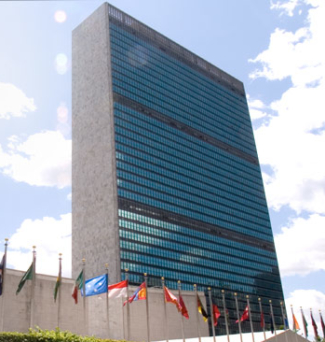
TEANECK - Ambassador Nassir Al-Nasser, permanent representative of Qatar to the United Nations, stressed the importance of the United Nations' role in regard to the situation in Iraq, terrorism and the conflict between the Israelis and Palestinians, in a lecture Oct. 1 to students and faculty at Fairleigh Dickinson University in Teaneck.

The evening speech was a segment of the university's United Nations Pathways Lecture Series, which aims to teach tomorrow's leaders about the United Nations and pressing global issues. It was presented by The Ambassador's Club at the United Nations and co-sponsored by The Record and Herald News.

"Unless all members of the United Nations, big and small, re-confirm their strong commitment to multilateralism and the establishment of an international human order built on justice, equality and mutual interests, the world will enter into a serious crisis and will witness a time of terrible upheavals," said Al-Nasser. "Therefore, it is necessary that we should all strive to strengthen the role of the United Nations, enhance the performance of its institutions and provide it with the adequate resources to enable it to fulfill its international role as enshrined in the Charter."

Al-Nasser said, "The most dangerous problem today that the world is facing is the Middle East problem." He then defined the problems between the Palestinians and the Israelis, and attributed the violence to what he said was the Palestinians' legitimate property rights being ignored.

"The policy of siege, starvation, and military incursion, as well as the destruction of property and desecration of holy places, is in total contravention, not only of signed agreements, but also of international law and humanitarian norms," said Al-Nasser, who would like to see the "Road Map" proposed by the Quartet Committee adopted.

Al-Nasser also spoke of the Iraqi war and its aftermath.

"They [Iraqis] are filled with anger of the system from before and now they are not being given what they had been promised; no jobs, no food.

"To help Iraq to overcome its [the war's] effects and reper cussions, effort should be exerted to restore security and stability all over the country, and provide urgent humanitarian aid to the brotherly Iraqi people, especially food, health, social and other services so that Iraqis will be able to transcend this ordeal, put an end to their long suffering and resume their normal life in their homeland with peace and dignity," Al-Nasser said.

Qatar recently made a large contribution in that humanitarian aid, when the country invested $15 million to initiate a fund to help with the higher education of Iraqi people. Al-Nasser said education has the prospect of becoming another means of promoting peace.

"Educational institutes can play a pivotal role through encouraging values of equality, justice and respect to others, and condemnation of promoting hatred, through specific educational programs and curricula that aim at cultivating such values in the minds of the young generation," he said.

Throughout the lecture, Al-Nasser repeatedly said the United Nations should give the Iraqi people a timetable, to reassure them that they will, some day soon, rule their own country, and an estimate of when that day will come.

"Tell them five years, four years. One year is too short," the ambassador said. "If they [the United Nations] want to help them [the Iraqis], they should tell them, 'In six months' time Iraq will have a new constitution.' "

Al-Nasser said his country whole-heartedly condemns terrorism. He described Qatar's dismay at the events of September 11, 2001, as well as the attack on the U.N. Headquarters in Baghdad. He went on to propose a method for fighting terrorism efficiently.

"I believe that the international effort against terrorism, regardless of how effective it is, will not eradicate this phenomenon unless it gets to its underlying causes, including political, economic and social aspects that constitute fertile breeding soil for terrorism."

In his discussions of Iraq, terrorism, and the conflict between the Israelis and Palestinians, Al-Nasser continuously called attention to the important role of the United Nations in seeking peace. He warned of the loss of life and other consequences that would result if the United Nations was not respected, or if agreements were ignored.

"If the world decided to solve the Iraqi problem through the United Nations, we would not be facing today real threat and losing so many innocent lives," Al-Nasser said.

After the speech, Al-Nasser fielded questions and comments from audience members, some of whom took issue with his remarks.

Begun in the spring of 2002, this lecture series brings ambassadors from throughout the world speak to students about current events and issues of global significance.


The Presidency
Winter 2003

Ubiquitous Distributed Learning and Global Citizenship

By J. Michael Adams and Michael B. Sperling

Most mission statements are irrelevant to all but the people who write them. A faculty member assigned to teach Introduction to Sociology might not see any relationship between the institution’s mission and how he or she approaches either the content or the delivery of the course.http://acenet.edu/bookstore/index.cfm?pubID=51 A newly hired assistant professor might not even know that the institution has a mission statement. Accrediting agencies and boards of trustees require a mission, and so institutional faculty and staff write a mission statement. However, that is generally the extent of its use. It may be dusted off for inclusion in a strategic plan or prominent display during a site evaluation visit, but it has little or no impact on day-to-day operations. Yet an institution’s mission should drive all its activities and initiatives. How does that happen? How can it impact and influence the content and delivery of that sociology course? How can a mission actually become meaningful to a college community?

In April 2000, Fairleigh Dickinson University (FDU) adopted a new mission: to prepare students as global citizens who can function and succeed across cultures and environments in an increasingly interdependent world. It is easy to write a mission statement. However, we learned that it is many times more challenging to create a “sense of mission” across a large, complex, and diverse organization, and to make it relevant.

Global citizenship is a complex issue. What does it mean? How can institutions achieve it? Is it a process or an outcome? And how do we prepare students for an unknown future characterized by diversity, nearly universal digital information access, global interrelationships, and—especially—rapid change? One of the most effective means to educate global citizens is through Internet-based distributed learning, but perhaps in ways different from those that many university leaders presume...

(Excerpted from The Presidency, Winter 2003)


The Chronicle of Higher Education
March 22, 2002

'Hybrid' Teaching Seeks to End the Divide Between Traditional and Online Instruction

By Jeffrey R. Young

Walter Cummins, an English professor sporting a gray beard and a tweed jacket, began to tell a meandering anecdote during a Friday morning class at Fairleigh Dickinson University's campus here. Several students exhibited classic signs of tuning out. One stared out the window, while another picked at her fingernails distractedly.

Moments like this make some professors and education-technology experts wonder: Would it be more effective to replace some traditional class meetings -- or even whole courses -- with online sessions? After all, in a virtual classroom, students can log in when it is convenient for them, and they can review prerecorded lectures if they miss them the first time. And some students who rarely take part in classroom discussions are more likely to participate online, where they get time to think before they type and aren't put on the spot.

As Mr. Cummins puts it: "Why do we have to meet twice a week? Why can't there be another type of activity that substitutes for a class?"

At Fairleigh Dickinson, administrators say the online requirement is part of an effort to give students a "global education." The college has hired 15 "global virtual faculty" members living in other countries. The adjunct instructors are paid about $1,000 per semester to participate in online courses led by campus-based professors.

"If you can reach the world, you can bring the world to campus," says J. Michael Adams, the university's president.

Such questions are popular at Fairleigh Dickinson, which has taken the unusual step of requiring all of its students to take at least one course online each year, beginning with this year's freshman class. With the requirement, most students at the university -- even those who live just a short walk from classroom buildings -- will take about 10 percent of their courses online. Though officials here say they are proud of the institution's teaching, they also say that students should get used to taking online courses. And they hope the online-course requirement will help bring outside perspectives to their campus.

This year, all freshmen at Fairleigh Dickinson are required to take an online course called "The Global Challenge," which is a revised version of a core class the university has offered for years. Though most of the course is online, it also requires six or seven in-person meetings throughout the semester.

Student reaction to the online-learning requirement has been largely positive -- perhaps because they realize that many sections of the course would otherwise be offered at 8:30 a.m.

"I would rather sit at home and do my work than have to get up in the morning," says Mili Patel, a freshman who took the Global Challenge course last semester. "I work well on my own," she adds.

But some students have had difficulty adjusting to the virtual-classroom environment.

"In the beginning, I had a lot of trouble with online," says Dave Dragani, a freshman who also took "The Global Challenge" last semester. "I think it would be better if it was in the classroom."

Catherine Kelley, assistant provost for educational technology, defends the requirement. She says students will probably need to know how to take online courses once they leave the campus, because many continuing-education courses are already offered online.

"For some of the students, it's medicine," says Ms. Kelley. "They may not like it, but they need it -- like a basic composition course."

In fact, one of the main goals of the university's requirement is to use the campus environment to teach students how to succeed in virtual classrooms.

"It's like learning a foreign language," says Ms. Kelley. "The best way to learn it is to immerse yourself in it." And when on-campus students do struggle with online courses, they can go to a professor's face-to-face office hours for guidance.


The New York Times
August 5, 2001

High-Tech Minded

By Lisa Guernsey

Back in the 20th century, the trick to achieving a college diploma was: read books, go to class. But Fairleigh Dickinson University is asking students to follow the opposite strategy. Beginning this fall, entering freshmen must take at least one course a year online, generally shunning books and the classroom.

"Each of our college graduates has to have a high level of facility with the Internet," said Michael B. Sperling, associate provost for interdisciplinary, distributed and global learning. "We're talking about being able to work in collaborative teams in a digital environment, to be able to converse in an online environment."

The program, which is thought to be a first, will be taught in part by professors at other universities around the world. [Called the global virtual faculty, some of these individuals are professors but many are practitioners in their fields.] Freshmen are expected to take a course called The Global Challenge, which deals with environmental, cultural, societal and political issues. As sophomores, those students will be offered an array of courses modeled on the traditional ones at the university, which has a student body of 9,000 and campuses in Teaneck-Hackensack and Florham Park-Madison, N.J. [FDU also has campuses in Wroxton, England, and Tel Aviv, Israel.]

All communication will take place through online bulletin boards, e-mail, chat rooms and Web conference areas. Books are optional.

"We're going to ease them into the experience," said Jason Scorza, a professor of political science who is helping develop the online courses. That is, the first six sessions for freshmen will be taken the old-fashioned way -- face-to-face.


The Chronicle of Higher Education
April 13, 2001

As Distance Education Evolves, Choices Reflect the Cultures of Institutions

By Dan Carnevale

... at Fairleigh Dickinson University, online education is central to the institution's mission, says Michael Sperling, interim dean of its University College [now associate provost for interdisciplinary, distributed and global learning] and the distance-education coordinator.

Starting with this fall's freshman class, students will be required to take at least one online course a year. With the Internet and computers becoming more important in daily life, he [Sperling] says, it's crucial for students to be able to perform tasks like organizing a team project online and using the Internet for research.

"To be a well-rounded, proficient college graduate, it's a 'skill' you have to have -- and we say 'skill' in quotes because it's not just surfing the Net, it's being able to use the Internet effectively," Mr. Sperling says. "It's a very different motivation than what other people are doing."

For example, the University is developing an online course, called "The Global Challenge," that will be required for all students, he says. It will be an interdisciplinary course covering armed conflict and environmental growth from various world perspectives. The course will touch on issues drawn from the humanities, social sciences and natural sciences, he says.


The Star Ledger
April 2001

Learning To Go the Distance

By Kathy Mullins

Along with learning how to do their laundry and work their meal card, freshmen at Fairleigh Dickinson University this fall will learn how to take credit courses online.

University President J. Michael Adams says that by requiring every undergraduate to participate in a distance-learning course each year, it shows FDU recognizes that the Internet is a fundamental learning tool.

"This is a new model based on the conviction that this new way of learning is important to an educated college graduate and enhances the value of an FDU degree," explains Dr. Michael Sperling, coordinator of the school's distance learning initiative [and associate provost for interdisciplinary, distributed and global learning].

All new freshmen will take the same online course this fall. "This core seminar focuses on several global issues, such as pollution and nuclear proliferation. We are adding enrichment material that the Web makes possible as well as resources from around the world," says Sperling. For example, students can link to the City of Hiroshima Web site to understand nuclear destruction.


The Star Ledger
February 4,2001

Seizing the Benefits of Online Learning

By J. Michael Adams
President of
Fairleigh Dickinson University

Is distance learning better or worse than the traditional classroom environment? Some watch the wave of distance-learning developments and worry that the tides of technology threaten the very fabric of the educational process. There are those who see online delivery as a radically new, inexpensive and profitable vehicle to reach unserved students. Others defend the sacred grounds of the classroom environment.

There is another approach. We should refuse to become embroiled in a debate over the merits of online learning. At the same time, though, we must recognize that distance learning can transform students' lives, and it must play a significant role in the education process. That's the philosophy at Fairleigh Dickinson, where, beginning in September, we will become the first traditional university to require all students to take one online course each year. Every Fairleigh Dickinson student will know how to learn online, but more importantly they will discover how the Internet can be used to connect people and to open doorways to new worlds and new cultures.

The age in which we live demands that people think and act globally. But to be a global citizen, one must seize the benefits of modern technology. Without question, the Internet is the most important innovation in learning in recent history. We can reach people throughout the world in seconds, and we can find more information from our computers in one hour than in a week physically in a library. Building on those obvious merits, I believe the Internet is a powerful learning tool. It can bring teachers and students from throughout the world together, and it can expose students to insights and perspectives found on every corner of the globe.

Many universities have introduced online courses as a way to bring their programs to new students in distant localities. Some have viewed online learning as an inexpensive way to deliver programs and build revenue. But this should not be our motivation. Rather than using the Internet to bring in students from the world, we should emphasize using the Internet to bring the world to our students.

Institutions should establish formal relationships with scholars, civic leaders and organizations throughout the world. The possibilities are endless. Imagine a student in an anthropology course studying online with an anthropologist working in New Guinea, or an economics student in a chat room with a virtual faculty member from the World Bank or an economics professor at the University of Moscow. An American course taught by an American economist assisted online by a Russian economist would give students completely different views of looking at classic problems.

There is another issue and that concerns how information is organized on the Internet. Everyone is aware that with the bountiful supply of excellent data available electronically comes an inordinate amount of useless and incorrect information. Thus, we need to prepare educated people who can critically analyze the information at their disposal. Just as we prepare people to read a book critically, we need to help train students to be skillful drivers along the information highway.

But to emphasize such lessons and to encourage the introduction of experts from around the world does not mean surrendering control of the classroom. Local faculty should remain the architects of a global education. They should design the curriculum and organize the content. And they should continue to provide the traditional classroom environment. We need not take anything away, but instead add a new dimension.

There has been controversy over the merits of distance learning, but after working closely with and evaluating the potential of distance learning, I have found that by every measure distance learning can be just as effective as classroom teaching. Neither is automatically superior. They are two different ways of learning. You can be taught well in the classroom and you can be taught poorly in a classroom. The same applies to the Internet.

Some contend that an element of personal interaction is lost over the Internet. This issue needs to be addressed. We must provide opportunities for students to come together online and in person, and we must make sure students can schedule meetings with professors online and, when possible, in person.

Others argue that students will have too much freedom in an online setting and will find ways to circumvent online rules, in other words cheat. Ultimately, as educators we can't teach anyone anything. All we can do is provide the environment in which individuals have the chance to learn. The responsibility, as always, whether in the classroom or online, rests squarely on the student.

One thing is not debatable; the Internet is here to stay, and we have to prepare people to use it well. Not only can it provide tremendous benefits for a lifetime of learning, it also can bring people and cultures closer together. With the learning capability of the Internet, students can reach out beyond the normal boundaries, explore new worlds and learn how to play leading roles on a global stage.


University Business Magazine
December/January 2001

Fairleigh Dickinson Requires Online Courses for All Students

Online Education will soon be part of the education of on-campus students at New Jersey's Fairleigh Dickinson University. Beginning in fall 2001, incoming freshmen will have to take one FDU online course for every 32 credits they earn. FDU is thought to be the first university with such a requirement.

[Michael Sperling, associate provost for interdisciplinary, distributed and global learning, was quoted as saying:] "Increasingly, people will be spending a lifetime of learning with the Internet. There are skills that we see as vital to our students: to learn effectively with the Internet, to know how to pace yourself appropriately, to engage in threaded discussions and collaborative workshops."

FDU has recently stressed global education as part of its identity. The school hopes online courses will also allow "adjunct faculty" from abroad to work alongside university-based instructors. "If there is a course in East African politics, we can bring in somebody from the Ministry of Education in Kenya," Sperling says. "We'll be forging contacts with distinguished people from around the world and engaging them in these courses, bringing the world into our university."


The London Times
December 8, 2000

College Insists on Internet Familiarity

Jon Marcus

With distance education being touted as a way to bring high-level courses to far-flung audiences, one American university has begun ... requiring students on its campuses to take at least one online course per year from its own faculty.

The idea, said officials at Fairleigh Dickinson University, is to make students more familiar with the internet.

"We've asked ourselves what is the skill set global citizens will need," said J. Michael Adams [president]. "One of those things is facility with the Internet. In the future, if an individual feels he or she needs to learn a new skill, we believe the first place they will look is on the Internet."

Seventy percent of US universities now offer distance-learning programmes, but none for the students on their own campuses.

"A common view of distance learning for many universities is that it is a way to reach new markets and create a new income stream," Dr. Adams said. "We're not taking that view. The corollary is that if you can reach out to that world, you can bring the world back to the campus."

Academic, cultural and corporate leaders from all over the world are being recruited to become involved in the university's distance-learning courses, he said. "If I'm an anthropology student, if I take that course by distance learning, I may be online part of the week with an anthropologist on the ground in New Guinea, all of which adds a world view to the educational process."


The Chronicle of Higher Education
October 20, 2000

A University Moves to Require Distance Courses

By Sarah Carr

Fairleigh Dickinson University has taken the unusual step of requiring that all undergraduates complete at least one distance-learning course annually.

While thousands of students take online courses each year, Fairleigh Dickinson, which has two campuses in New Jersey, may be the first university to require that all resident undergraduates do so.

Fairleigh Dickinson's president, J. Michael Adams, said the requirement was part of an effort to help students become "global scholars" who are able to use the Internet for a variety of purposes.

"I refuse to get involved in a debate over whether distance learning is better or worse than classroom teaching," said Mr. Adams. "It is simply different. And it is one channel that our students must be skilled in."

The university already offers distance learning for students who don't live on campus, but it now plans to shift its attention to creating online courses for traditional undergraduates. "We have taken a significantly different view of distance learning than most other universities," said Mr. Adams. "Most see it as a vehicle to reach new student populations."


USA Today
October 17, 2000

Campus Requires Online Courses

By Amy Westfeldt, The Associated Press

(Note: A similar version of this AP story appeared in print and Internet media throughout the country.)

It sounds like a college student's dream -- a university requiring students not to come to class. Starting next year, new students at Fairleigh Dickinson University will be required to take at least one course a year online. It's believed to be a first for a college or university.

"We believe it's a transforming learning tool," says J. Michael Adams, president of the 9,000-student university. "If we are preparing global citizens, we believe that our graduates must be facile with the Internet."

A spokesman for a non-profit group that represents 1,750 university technology officers says he knows of no other university that has required its resident undergraduates to take an online course, but "others will probably be doing this," says Bob Burdick, spokesman for Boulder, Colo.-based EDUCAUSE.

"The assumption is that students will increasingly demand this kind of service because it offers them a tremendous capability to structure their own time."

"Distance learning, when it's done right, can be as effective as classroom instruction," Adams says. "It is neither better nor worse. It is just different."


Fairleigh Dickinson University
Office of Global Learning
1000 River Road
Teaneck, NJ 07666
201-692-7360
Email: globallearning@fdu.edu


Global Education at FDU · Leadership · Global Virtual Faculty · Online Learning · Student Opportunities
Faculty and Curriculum · United Nations Pathways · Publications · Contacts


Copyright © 2003-2004, Fairleigh Dickinson University. All rights reserved. Information on FDU web pages is provided as a convenience for the University community and others seeking information. It is the responsibility of the visitor to verify the information. This page originally created with FDU Pagetoaster 2. [Latest update 040216] Click to see how'd they do that?
Click if you are the owner and you wish to edit this page.